Data and Resources
UKGC Licensing Explained Check a Casino Is Safe
Non-remote general betting limited operating licence Non-remote general betting standard operating licence The ancillary licence does not authorise a remote link with gaming that takes place on another set of premises. If you are a local authority/ licensing board, how many premises licences were live in your licensing area in the 22/23 financial year?
Data and Resources
The UK market is tightly regulated, but unlicensed and rogue operators do exist — particularly sites that target UK players without holding a valid UKGC licence. The casino arm is a solid complement to its sports betting product, offering a well-stocked slots section and a live casino lobby with popular table game variants. TalkSPORT BET Casino carries the credibility of the UK’s most listened-to sports radio station into the online gambling space. The integration between casino and sports betting is seamless, making it a strong all-rounder for players who enjoy both. The mobile app is polished and responsive, making it easy to switch between sports betting and casino play.
- They must adhere to strict regulations to protect British players.
- Non-remote external lottery manager operating licence
- In March 2020, the UKGC made it mandatory for online gambling operators to participate in the self-exclusion scheme GamStop.
- Evidence was received in response to the land-based gambling consultation and through an additional supplementary consultation which focused on this reform specifically.
- The 2 additional options consulted were Option 2(a) and Option 2(b).
Chapter 1: Casino measures
The additional annual cost per premises is an average across all premises types and in reality, will differ depending on the type of licence held. The additional annual cost per premises and the total additional annual funding for licensing authorities has been estimated using existing premises numbers. We believe it is appropriate to increase these fees so that local authorities can cover the costs of their gambling licensing and enforcement activity, and increase activity where needed. They are therefore essential for ensuring that licensing authorities can properly regulate gambling in their areas.

409.This section describes, in subsection (1), the premises licences that may be issued by a licensing authority. 408.Part 10 contains provisions concerning gaming machines, and the categorisation of machines by the Secretary of State. 407.Part 18 contains provisions requiring all licensing authorities to set three-year licensing policies in respect of all of their functions under the Act, including premises licences. Conditions on premises licences can be set by the licensing authority, and by the Secretary of State, or Scottish Ministers.
Well-trained staff enhance player safety and align with casino staff regulations UK. From dealers to security personnel, employees must be trained and treated fairly, with compliance extending to workplace regulations and gambling-specific requirements. Non-compliant operators risk fines, reputational damage, or license revocation, underscoring the need for casino compliance. This involves checking government-issued IDs, utility bills, or bank statements, aligning with casino licensing requirements UK. KYC processes require casinos to verify a player’s identity, address, and age before allowing deposits or withdrawals.
Where an application is made in the form of a provisional statement it is to be treated in the same way as an application for a casino premises licence and included in any two-stage determination process that the authority is required to carry out. Where an authority invites applications, those applications may be in the form of an application for a provisional statement as well as in the form of an application for the grant of a full casino premises licence. Ministers are poised to crack down on unlicensed casinos sponsoring British sports teams amid criticism that a delay to the proposals has opened the door for offshore gambling firms to strike lucrative deals with Premier League clubs. This licence is for existing casinos which were originally licensed under the Gaming Act 1968 (opens in new tab). This licence allows you to manufacture, supply, install or adapt gambling software by means of remote communication. Clients trust Wiggin to navigate a broad range of legal matters, including obtaining and maintaining licences, international expansion, business acquisitions and sales, intellectual property protection, data security, dispute resolution and regulatory compliance.
In England & Wales this is the local authority, whilst in Scotland this is dealt with by licensing boards. A working knowledge of this document is essential for anyone who wishes to operate a casino in the UK. Depending on the number of persons who would hold certain positions within the applicant organisation, there may be an additional requirement for them to hold their own personal licence.

Please outline any other proposals relating to machine allowances in arcades and bingo halls that you think that we should consider. Please explain why this is your preferred option. (Mandatory response)Significant increase / Small increase / No impact / Small Decrease / Significant Decrease / I don’t know (Mandatory response) A large increase in GGY / A small increase in GGY / No impact on GGY / A small decrease in GGY / A large decrease in GGY / I don’t know What impact would options 1, 2 and 3 have on Gross Gambling Yield (GGY) for businesses? (Mandatory response) A significant increase in ability to meet demand / A slight increase in ability to meet demand / No impact / A slight decrease in ability to meet demand / A significant decrease in ability to meet demand / I don’t know
The government will consider the need for bespoke dedicated safe play messaging as part of cashless gambling on gaming machines. As mentioned above, the existing regulations prohibit the use of debit cards for direct payments to gaming machines, and prohibit any use of credit cards. The introduction of direct forms of cashless payments on gaming machines, subject to suitable safeguards, therefore represents an opportunity to future-proof the land-based gambling industry.
(a)the non-gambling area may consist of one or more areas within the premises, In this Part, where premises are required to contain a non-gambling area— In this Part, in determining the floor area of the gambling area of premises, all areas in which facilities for gambling are provided on the premises must be taken into account.
Land-based gambling has a significantly larger workforce than online gambling. They are a significant part of land-based gambling, constituting 51% of non-remote Gross Gambling Yield (GGY) in 2022. Some venues also operate a ticketing system, which allows customers to purchase a ticket with a debit card for use on a gaming machine. For example, some machines accept indirect payment from a debit card via mobile apps. The Gambling Act 2005 and the Commission’s Licence Conditions and Codes of Practice permit operators to innovate to some extent, and industry has introduced some cashless gambling. However, it is still non gamestop casinos the primary way to pay for machines in land-based venues.
Subsequent discussions with industry have indicated that this would equate to the majority of casinos in practice. Seven operators replied to this section of the consultation, some of which account for multiple venues and a significant proportion of the land-based casino sector. Venues would be required to comply with these requirements in order to increase their gaming machine allowance. If you selected ‘No’, please provide an alternative proposal for gaming machine entitlements if you have one. Respondents from the land-based gambling industry were generally supportive of proposals which would remove restrictions on supply, pointing to the unrestricted availability of the same products online.
Follow these steps to confirm an operator holds a valid UKGC licence If you encounter an unlicensed gambling site targeting UK consumers, you may report it directly to the Gambling Commission. Always verify an operator’s licence before depositing funds. Unlicensed operators are illegal in Great Britain and offer no consumer protection. Note that Northern Ireland has separate gambling legislation and is not within the Commission’s jurisdiction.
In response to these challenges, the white paper committed to changing the 80/20 rule to 50/50 to better meet the needs of industry and demands of customers. We welcome further evidence on the unmet consumer demand in the consultation response. The main theme that emerged from industry was that the current rule does not allow operators to meet consumer demand. A number of premises, particularly those located in motorway service stations, chose to retain their existing entitlements. Please upload any further evidence or any other information that should be considered as part of this consultation relating to casino measures. (Mandatory response)Increased revenue / No impact Decreased revenue / I don’t know
The government understands some of the arguments put forward by industry, particularly about the potential impact on player behaviour if net position and time was permanently on display on the machine. They also argued that it is an invasion of a customer’s privacy and that many people would not be comfortable with other players knowing how much they have spent and how long they have played on a machine for. This will ensure that the breaks designed to allow customers to make more informed or dispassionate decisions about their gambling are supplemented by safer gambling messaging and not used for any other purposes, such as promotional offers. This research recommended that the use of personalised messaging based on an individual’s own patterns of gambling may be more effective than generic messages. Others cited research which has been undertaken on safer gambling messaging, including from the Behavioural Insights Team and the Personal Finance Research Centre (University of Bristol). Some respondents from outside of industry stated that safer gambling messages should be designed independently of industry and that some of the existing industry-led safer gambling messages are ineffective.
Six guarantees you get at a licensed casino that you simply don’t at an unlicensed one. The UK Gambling Commission (UKGC) is the independent regulator for gambling in Great Britain, set up under the Gambling Act 2005. This guide explains exactly what a UKGC licence means, how to verify one in under a minute, and how to spot a site that doesn’t have one. We may earn commissions from operator sign-ups, at no cost to you. We may earn affiliate commissions when you click through links on this site.

The overall evaluation is judged on a case by case basis having regard to the importance of the matters to which it relates and risk to the licensing objectives. The fact that one or more elements are ‘just adequate’ or less does not always mean that the licence will be refused. The Commission may consider relevant offences which would otherwise be considered ‘spent’ under the Rehabilitation of Offenders Act 1974 (opens in new tab) when considering an application for a licence.7 More information on the treatment of criminal convictions is as follows.
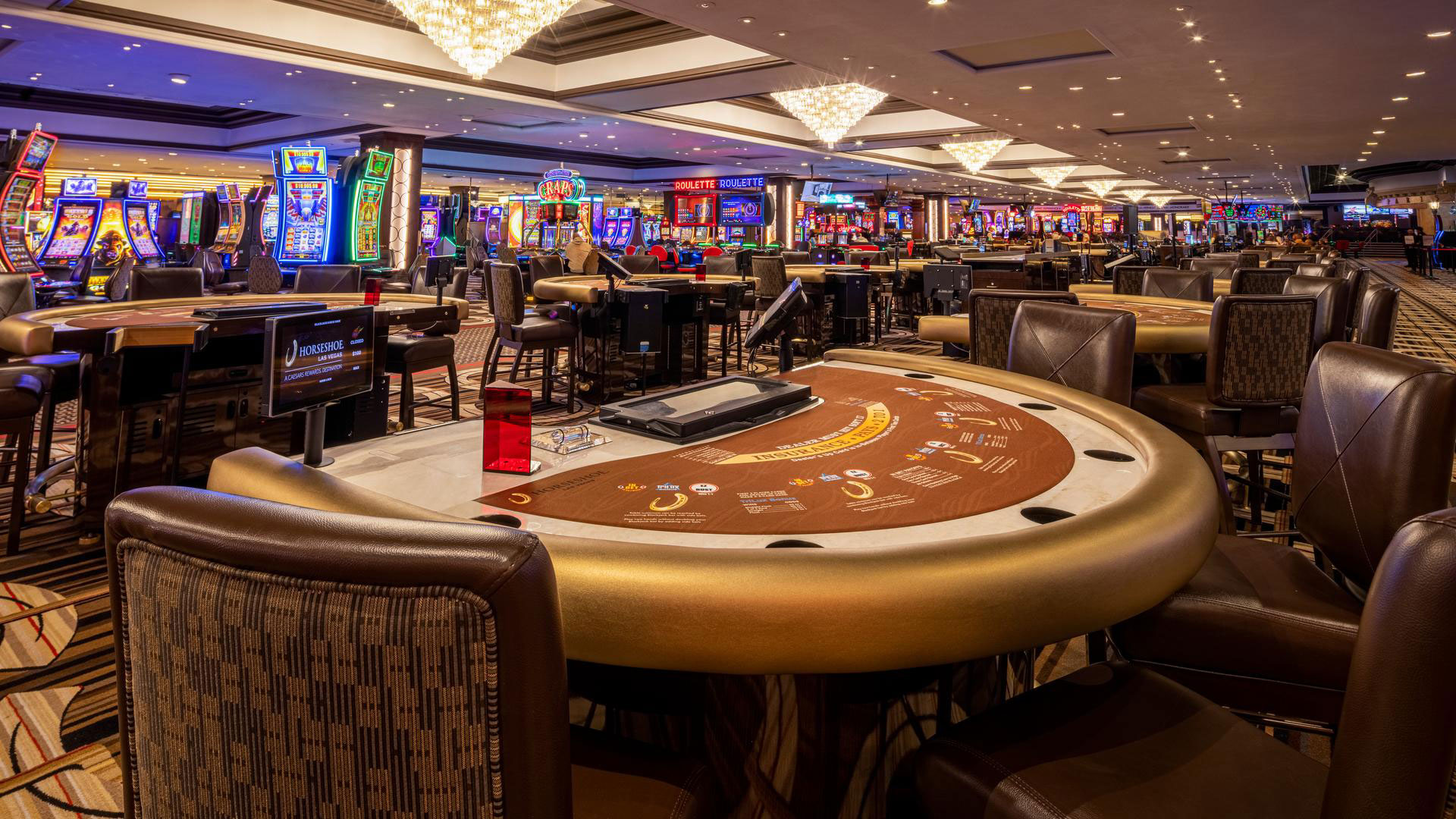
The majority of these respondents argued for measures which tended to be more restrictive of the gambling products available within the land-based sector. Industry responses frequently highlighted the commercial pressures placed on their businesses in recent years – as a result of COVID-19 inactivity and rising energy costs – as a central reason for necessitating greater commercial flexibility. The majority of these responses came from respondents who submitted evidence to the original consultation. We also received 16 additional responses to a supplementary consultation which was held specifically to gather further evidence on the reform of the 80/20 rule.
Data from the National Gambling Treatment Service shows that a relatively small proportion of patients report participating in gaming machines in casinos. We will use the responses to this consultation as well as wider engagement with the sector to gather data to estimate the likely uptake of additional machines by casinos. Taken together, the three measures will determine the maximum number of gaming machines that casinos will be entitled to. Some of the same size requirements for Small 2005 Act casinos will apply for 1968 Act casinos, should they increase their entitlement to gaming machines to more than 20 (including one or more Category B machines). This will ensure that casinos continue to offer a variety of gaming and non-gaming activities for customers while at the same time allowing a greater number of machines to be sited on the premises. The sector views an increase to this ratio as essential in order to ensure these casinos’ long term viability by allowing them to site more gaming machines, and this conclusion was reflected in the white paper.
If you have signed up to Gamstop and are still struggling with finding yourself playing on casinos not on Gamstop. In other words, you do not need to go around blocking every online casino individually, nor do you need to muster the will to keep yourself from playing. As a reminder, online gambling should only be one aspect of your life, not an unhealthy obsession or a way to make money.
Allowing 1968 casinos to increase their machine offering above their current allowance of 20 could result in greater customer willingness to take breaks, which will likely increase reflection and reduce risk. This includes many casinos monitoring customer expenditure across all gaming products, enhanced due diligence measures with trigger values for spend and loss applied to customers and algorithmic systems that use predictive models to identify customers at risk. We also intend to permit a smaller increase in machines for venues that do not meet these size requirements, proportionate to overall size and non-gambling area. The white paper set out the government’s intention to bring the two regimes closer together, with similar requirements on machine numbers proportionate to size, non-gambling area and gaming tables. In practice, operators elect to site Category B machines and typically have an offering of 20 Category B1 machines. To achieve this, we are consulting on options for amending the 80/20 rule to a new requirement that 50 percent of machines must be Category C or D.
Verify the licence is current and matches the casino’s trading name All UKGC-licensed casinos must now prompt new customers to set deposit limits during the account registration process. However, the UKGC licence also provides access to one of the world’s largest regulated gambling markets and carries a level of credibility that few other jurisdictions can match. For operators seeking to access the UK market, the UKGC licence is a prerequisite. For a remote casino operator with GGY above £1 billion, the annual fee is £793,729 plus £125,000 for each complete additional £500 million of GGY above £1 billion.
Therefore, we are consulting on how best to allow casinos to move onto the new regime. What impact is permitting sports betting expected to have on revenue from non-gambling activities e.g. increased income from sports bars which allow customers to place a bet? If your casino already offers sports betting, what is the GGY from this activity? However, at this stage we do not know precisely what the GGY benefits will be, as we do not have any evidence on how casinos and players will respond to this proposal. If this proportion was representative across all casinos, then total casino sector GGY could increase by approximately £1.3 million.